

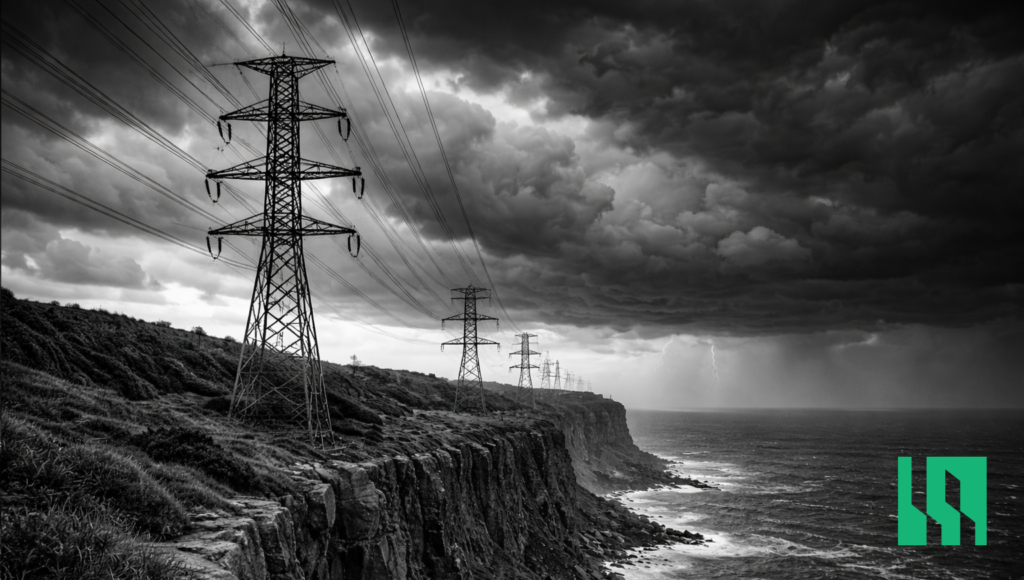
Energy organisations do not get to treat cyber as a back-office issue. With SOCI obligations becoming more significant, when things fail, they fail in public: outages, safety risk, loss of customer trust, and regulatory escalation.
The lazy response is compliance theatre: more policies, more tools, more reporting. That looks busy right up until the day you need to prove you can detect, decide, and recover under pressure.
The only approach that holds up is operational resilience with enforcement. Material initiatives do not proceed without evidence, and operations do not accept systems without tested handover.
The SOCI obligations reality: reporting clocks and decision pressure
Under Australia’s critical infrastructure incident reporting regime, time is not on your side.
-
Critical cyber security incidents: notification within 12 hours once you become aware, where the incident has a significant impact on availability.
-
Other cyber security incidents: notification within 72 hours once you become aware, where the incident has (or is likely to have) a relevant impact such as integrity, reliability, or confidentiality.
These clocks reward organisations that already know three things within the first hour:
-
What is impacted (and what is not)
-
Who can make decisions (fast)
-
What evidence supports those decisions
If your incident process relies on “we will work it out in the moment”, you are betting against physics, incentives, and time.
The delivery risk pattern that creates outages
Most cyber risk is accepted during procurement and delivery, not during BAU. Energy is no different, but the consequences are harsher because reliability is the product.
The common pattern looks like this:
-
A strategic program selects a vendor and assumes controls
-
Integration bakes in risky access paths and weak monitoring
-
Go-live happens with “temporary” exceptions
-
BAU inherits an under-documented system with unclear ownership
That is how you get preventable outages, slow incident decisions, and recoveries that drag.
The mechanism that works: Six Security Gates
You do not need “more security work”. You need explicit decisions and owners at the moments that matter.
Six Security Gates forces evidence and ownership at the points where risk gets locked in:
-
RFP and Selection
-
Vendor Solution Context
-
Contractual Obligations
-
Design and Integration
-
Pre Go-Live
-
BAU Handover
The earlier you catch the gap, the cheaper it is to fix. The later you catch it, the gap becomes “operational reality”.
First, define materiality so you do not gate everything
If you apply gates to everything, leaders will route around it.
Start with materiality triggers suited to energy and critical infrastructure, for example:
-
Systems that impact availability or safety outcomes
-
New external access (support, remote ops, privileged access)
-
New hosting, new integrations, or major architecture change
-
Sensitive operational data, customer data, or regulated datasets
-
High vendor dependency or sole supplier risk
Then, assign decision owners so accountability cannot drift
A workable baseline for material initiatives:
-
Exec sponsor: go/no-go accountability
-
Security lead: evidence quality and exceptions management
-
Procurement and Legal: enforceability and supplier leverage
-
Operations owner: supportability, monitoring, BAU readiness
Ownership is not about blame. It is how you stop risk becoming “everyone’s job” and therefore nobody’s job.
Four critical infrastructure cyber resilience points to fix first
Energy leaders should focus on failure points where security gaps turn into reliability events.
1) External access and vendor dependency
Energy ecosystems are supplier-heavy. Remote access and support pathways are attacker favourites.
At Gate 1, demand:
-
Security requirements scored in the RFP, not bolted on later
-
A signed responsibility matrix (vendor, customer, shared)
-
Fit checks for identity, logging, monitoring, support model
Defensible leadership position: We proceed with vendor selection when requirements are contextualised, posture is validated, fit is proven, and risk ownership is explicit.
2) Monitoring and escalation that is configured, not tested
Monitoring that has never been tested is not monitoring. It is hope.
At Gate 6, demand:
-
Alerting and escalation tested end-to-end
-
Clear ownership for triage, decisions, and communications
-
Runbooks exercised, not written and ignored
Defensible leadership position: We proceed to BAU when operational ownership is named, escalation is tested, and remediation cadence is enforced.
3) Identity and access paths that do not match the real environment
Identity integration is where projects quietly fail. “We will integrate later” is resilience debt.
At Gate 2 and Gate 4, demand:
-
Fit checks for SSO, MFA, privileged access, service accounts
-
Documented data flows and access paths
-
Measurable security requirements tracked in delivery
Defensible leadership position: We proceed through delivery when security requirements are measurable, acceptance criteria are testable, and exceptions have owners and expiry dates.
4) Recovery and resilience assumed, not proven
Backups and recovery are not “owned by IT”. In energy, they are operational continuity.
At Gate 5, demand evidence for:
-
Backup integrity and recovery testing (not just backup jobs running)
-
Detection and containment capability
-
Decision thresholds for shutdown vs continue
-
Residual risk accepted in plain language
Defensible leadership position: We proceed to go-live when critical controls are evidenced and residual risk is explicitly accepted.
What an audit-ready evidence pack looks like
If you want SOCI readiness to survive scrutiny, stop relying on verbal assurance. Build an evidence pack that leadership can sign, defend, and review.
Minimum viable evidence pack for material initiatives:
-
Materiality decision (why this is gated)
-
Responsibility matrix (vendor/customer/shared, named owners)
-
Residual risk memo (plain English, time-bound actions)
-
Exceptions register (owner, expiry, compensating controls, funding)
-
Operational readiness pack (monitoring, escalation, runbooks, tested recovery)
-
Incident reporting runbook aligned to SOCI timeframes and thresholds
If you cannot produce the pack, you do not have governance. You have confidence.
A 30-60-90 plan for energy teams that need progress now
You do not need perfection. You need enforceable progress.
Days 0-30: Build the mechanism
-
Define materiality triggers that match energy reality
-
Publish the gate policy and decision owners
-
Build minimum templates: residual risk memo, exceptions register, BAU handover pack
-
Select two pilots: one procurement decision and one delivery initiative
Days 31-60: Prove it on real work
-
Run Gates 1-3 on the procurement pilot
-
Retrofit Gates 4-6 on the delivery pilot
-
Start a weekly cadence and exception ageing review
-
Run a short incident decision drill to test escalation speed against SOCI reporting clocks
Days 61-90: Scale and lock it in
-
Embed gates into PMO stage gates and operational readiness checks
-
Produce a monthly leadership pack: decisions made, residual risk accepted, exceptions ageing
-
Assurance sample the evidence packs and fix weak patterns
What leaders should measure
Measurement should drive decisions, not storytelling.
Track:
-
% of material initiatives using the gates
-
Exception ageing by owner
-
Time from issue raised to decision made
-
Incidents linked to delivery or handover gaps
-
Evidence pack quality (assurance sampling pass rate)
If a metric cannot drive action, delete it.
How Cliffside helps
If you want SOCI readiness without bureaucracy, treat resilience as an operating model, not a policy set. Cliffside can help you implement the gates, build evidence packs your leaders can defend, and test decision-making under pressure so reporting and recovery are not improv.
Start with a straight conversation and a sanity check on what will realistically work in your environment.
If you have any questions about anything related to this article, or if you’d like to have detailed discussion with our specialists, feel free to get in touch. Contact us online or call our team on (02) 8916 6389!